Commercial snow & ice contracts, winter 2026–2027

Commercial snow removal for plazas, offices, condominiums and industrial sites across the GTA

This page is for property managers, landlords and condominium boards in Etobicoke, Toronto, Mississauga and Brampton who need a commercial snow removal contract that states what triggers a visit, what gets cleared and how each visit is documented. Seasonal contracts run November 15, 2026 to April 15, 2027.

  • Defined triggers and response windows
  • Event logs with time stamps and photos
  • Certificate of insurance with every agreement
Illustration

What a commercial snow removal contract defines before the first storm

A commercial agreement is only as useful as the numbers written into it. MapleCore contracts set an accumulation trigger and a response window for each site, so tenants, the property manager and our dispatcher share one definition of a service event.

Triggers are set per contract rather than as one company-wide figure. A medical building with a morning clinic usually wants a lower trigger and a tighter window than a distribution yard that opens with the first shift.

Where the contract specifies them, daytime passes continue while a storm is still falling, so entrances and drive aisles are worked again during business hours instead of waiting for the snowfall to end.

  • Accumulation trigger in centimetres
  • Response window per qualifying event
  • Daytime passes where specified
  • Certificate of insurance with every agreement

Parking lot snow removal that follows a site plan

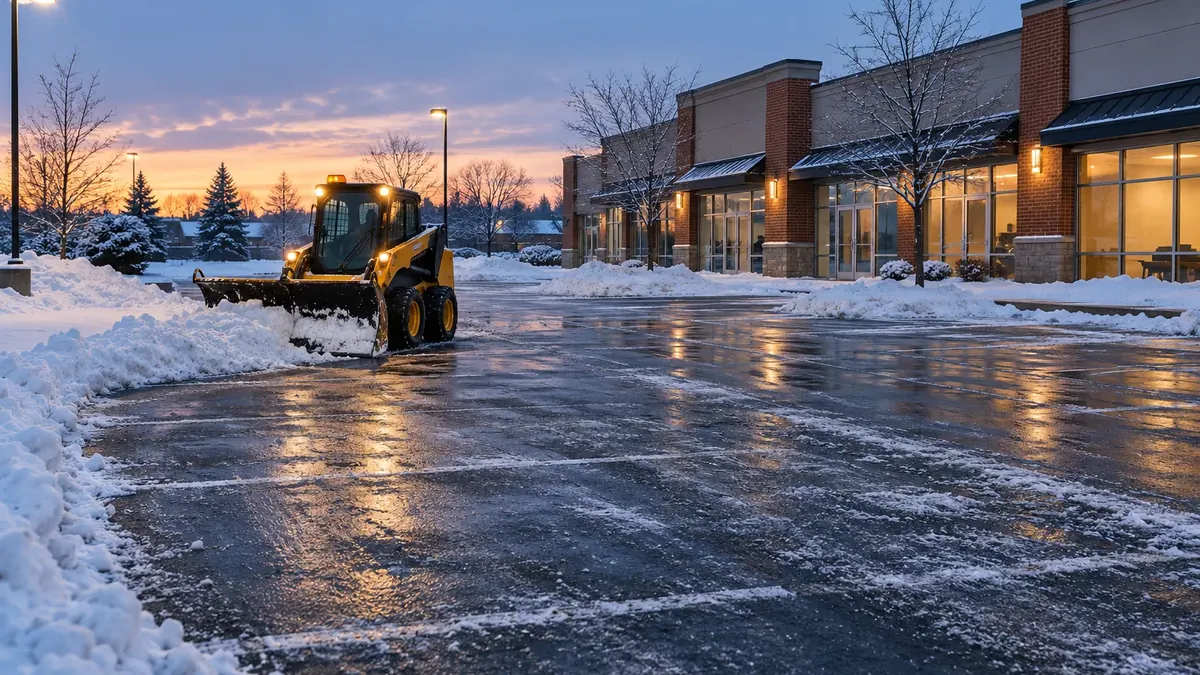
Every lot is plowed to a site plan agreed before the season: which drive aisles open first, where snow gets pushed and where piles can sit without blocking sightlines at the exit or taking over stalls.

Accessible spaces and fire routes come first, then the main aisles, loading areas and remaining stalls. Entrances, walkways, steps and ramps are cleared in the same visit, so the path from a parked car to the door is finished with the lot.

Commercial snow clearing on a tight urban lot runs out of stacking room faster than a suburban plaza with a landscaped margin. When the designated stacking area is full, optional hauling takes the piles off site so stalls stay usable through the back half of the winter.

Commercial salting and ice management, logged per application

The GTA sees freezing rain and thaw-refreeze cycles most winters, and those are the nights when a lot that was plowed clean can glaze over before the morning rush.

Each salting application is logged with the product used and the quantity spread, per site and per visit. That record sits in the event log beside time-stamped entries and photos, so a tenant's question about a specific morning is answered from the record, not from memory.

Dispatch is based on monitored weather data that the operations team reviews before crews are sent. Salting is quoted as a separate line in the proposal, so the ice management scope is visible on its own and you can decide which surfaces it covers.

How proposals, site walks and multi-property contracts work

Pricing is quoted per property after the team reviews the request, and there are no instant prices because two lots of the same size can need very different plans. The request is free and creates no obligation.

For larger or more complex sites the review may include a site walk to mark stacking areas, fire routes, accessible spaces and surfaces that need hand clearing. The written proposal lists the trigger, the response window, the surfaces covered, the salting line and any daytime pass arrangement, and a certificate of insurance comes with every agreement.

Seasonal contracts run November 15 to April 15, are invoiced in monthly instalments, and for winter 2026–2027 include the advertised 10% discount in the proposal. Portfolios with several buildings can be written as one multi-property contract with consolidated invoicing, or with per-site invoices where each building carries its own budget.
Properties we clear

For commercial properties

  • Retail plazas on arterial roads where tenants open early and the shared lot, fire route, accessible spaces and storefront walkways need to be clear before the first customers pull in
  • Medical and professional office buildings with drop-off lanes, ramps and entrance steps, where daytime passes are written into the contract for storms that run through clinic hours
  • Industrial and logistics sites with truck courts, dock aprons and shift-change parking, where stacked snow starts costing trailer space by mid-winter and hauling needs to be an option
  • Condominium corporations, multi-residential buildings and institutional sites held in a property management portfolio, on one multi-property contract with per-site event logs and consolidated or per-site invoicing

From request to first snowfall

  1. Step 1: Request a proposal

    Tell us about the lots, entrances and walkways, the hours the site must be clear and the records you need. It takes a few minutes and creates no obligation.

  2. Step 2: We review the property

    The team checks the scope, confirms your route and prepares a written proposal with the areas, trigger and response terms spelled out.

  3. Step 3: Agree the winter plan

    Accept the proposal and choose seasonal billing or monthly instalments, and the team confirms when your service starts.

  4. Step 4: Monitoring and service visits

    Crews are dispatched from monitored weather data. Each visit is logged with a time stamp so you know when the property was cleared.

Where our winter routes run

Commercial routes cover Etobicoke, Toronto (including York and North York), Mississauga and Brampton, built around the west and central GTA. The postal-code checker on the homepage gives a quick first answer for any address.

  • Etobicoke
  • Toronto
  • York
  • North York
  • Mississauga
  • Brampton

Coverage for your address is confirmed with your proposal.

Check your postal code

Routes are built around the west and central GTA. Enter your postal code to confirm coverage.

Related pages

Commercial snow & ice contracts, winter 2026–2027: common questions

What snowfall trigger do you use on commercial properties?

There is no single commercial trigger. Each contract sets an accumulation trigger in centimetres and a response window for the site, and sites that open early or serve the public usually ask for a lower trigger, which is priced accordingly in the proposal.

Is salting included, and how do we know what was applied?

Salting and ice management are quoted as a separate line in the proposal, so you can see what is covered. Every application is logged with the product and quantity spread, in the same event log as the time stamps and photos for the visit.

What happens when it snows all day while the plaza is open?

Where the contract specifies daytime passes, crews return during the storm to work entrances, drive aisles, accessible spaces and fire routes instead of waiting for it to end. Each pass is logged with a time stamp and photos, and the full clearing follows within the response window once the event ends.

How should we compare commercial snow removal services near me?

Ask every bidder for the same items in writing: the trigger and response window, the site plan with stacking locations, how salting is logged, and the certificate of insurance. A MapleCore proposal sets those out, and the certificate of insurance comes with every agreement.

Can several properties go on one agreement?

Yes. Multi-property contracts cover a portfolio under one agreement with consolidated invoicing, or with per-site invoices when each building carries its own budget. Each site keeps its own trigger, site plan and event log.
Guides and advice

All articles

Request a commercial winter proposal for 2026–2027

Send the address, the surfaces to be covered and your opening hours, and the MapleCore team will review the site and return a written proposal with no obligation.

647-809-7884Monday to Saturday, 7:00 am to 7:00 pm